Tuesday, 26 March 2019

online discussion

This blog is about my response on online discussion on Sharmeen Obaid-Chinoy's Academy Award for her documentary, "A girl in the River"


Sharmeen Obaid-Chinoy's academy Award for her documentry, A girl in the River, has been much celebrated at home. Deservedly so.

Like her first Oscar-winning documentary, saving face, which spotlit the horror of acid attack, this too is a visceral, urgent piece of film-making. But alongside the jubilation is another view, persistent and petty, that is inevitably voiced at such occasions. Widely shared by politicians, journalists, religious leader, in short 'patriots' of all stripes, this opinion has it that sharmeen  has done a grave disservice to her country by highlighting the misery of ordinary Pakistanis to further her own career. Hence, the twitter trend: DisownSharmeen. 

Why, he asked, 'had Adiga chosen not to write about the so many nice, nice things that are happening in India? The same critique was also trotted out when Danny Boyle's film, Slumdog Millionaire, won big at the Oscar. or when Malala won the Nobel prize. Or Sharmeen her first Oscar. Really, why can't  all these people just Photoshop our reality? why can't the hide our flaws and emphasize our virtues so we can win respect and admiration of Western societies? many 'concerned citizens' in Pakistan ask why Sharmeen did not make a film about that tireless humanitarian, Edhi, or better still, about the victims of drone strikes, cataloging American injustice, rather than our own.

Truth wins: The buzz around Sharmeen's film has prompted Nawaz Sharif to say that the practice of honor killings in Pakistan should come to an end.


   Postcolonial View :

     According to me if writer gets award from west it doesn't mean they becomes happy to seeing the condition of that region. But by spreading this situation, who is in power they may tries to change it . But after studying the Cultural Studies we might feel that ultimately they wants to show the inferiority of it. But yet it is necessary to open the eyes of people and also of the Power. 
        There can be a question arises in our mind that now they are ruling over us by this way ,But without deep studying we can not conclude this thing. 

     Cultural Studies :

     We may feel that this kind of writer wants to be famous in people by publishing this kind of work. Because to get more publicity they already knows which kind of work gives more publicity .
         In the country like India people has so many problems so they might feels that he or she is talking about us. They are arguing for us by publishing their work. 

    But yet it must require to talk against the power or  to talk about the real condition of the country . And we have great example of it is Ravish Kumar ,Who always draws the picture of real issues and also of real condition of the country .

  So this kind of writer is in a way doing good work. 

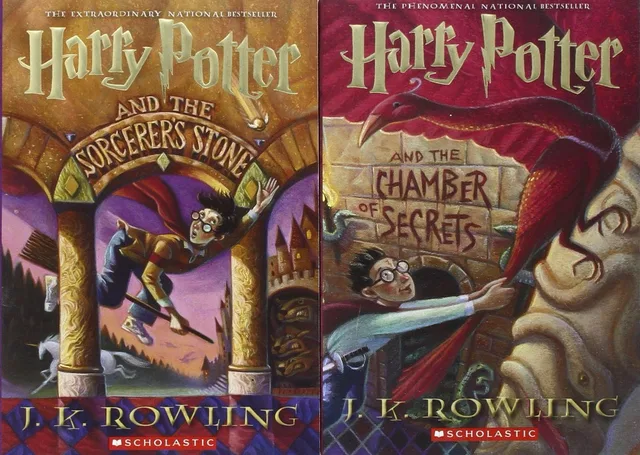
harry potter :- web-quest activity

  Hello Readers,


                                        This blog is a part of  my classroom activity on Web Quest on Harry Potter series in we have to search three best online sources and give argument and illustration for given point by Dr. Dilip Barad. To know more about Web Quest task click here to read professor's blog.


click here to see web quest worksheet.


click here to see rubric evaluation.


1)    Feminist reading of Harmione’s character in Harry Potter


Image result for feminist reading of harry potter


Hermione Granger, a good, loyal friend of Harry Potter. She is a manifestation of the author herself within the text. “Hermione is me,” Rowling has said in several interviews, “A caricature of me when I was younger”. She is not only as a strong female character, an essential part of Harry's life, but also as a feminist protagonist in her own right. Hermione represents the bookish knowledge, she knows the spells very well and also knows how to apply it. In the first and second part she represents the good virtues like, friendship, loyalty. In any kind of situation she stands for Harry.  

Hermione is the perfect example when examining the feminist principles in the novels. Throughout the series she has many strengths and weaknesses, but she is mostly criticized about her weaknesses as a character. At some time she becomes concious about her look, which becomes very problematic from feminine perspective. 


Other female characters like Mrs. Weasley, who represents motherhood, caring nature. Ginny, Luna, ProMcGonagall, all has significant role, though they remains shallow under the patriarchal power.


2)      Discourse on the purity of Blood and Harry Potter

In Harry Potter, J. K. Rowling includes several issues like racism discourse of blood like wizard blood, muggle blood.


1)    Muggles (non-magical persons)
2)    Muggle-borns (witches/wizards with magical abilities but non- magical parents)
3)    half-bloods (witches/wizards who are not pure-blooded, but also not Muggle-born)
4)    purebloods (those with complete magical ancestry)
5)    Squibs (a non-magical child with magical parents


In the world of wizards Hermione portrayed as marginalized, she doesn't have pure-blood, her parents are muggles. She insulted many times by Draco Malfoy on the name of muggle blood.


Harry described as half-blood, because only his father belongs to wizard world, and her mother is not. Through the aspects of blood author satires on the American society, and the raises the question of racism. Ron Weasley, a pure blood and good friend of Hermione and Harry. So, here author makes possibilities that the intellectual and ability does not dependent on the race or cast.


3)      Confronting reality by reading fantasy


Fantasy narratives are normality used to stand for a peculiar world that is present and seeable in the society. As one of the best-selling fantasy novels in history J. K. Rowling's Harry Potter and the philosopher's Stone introduces one of the most loved and traditional hero in the character of Harry Potter. Harry is an ordinary orphaned male child who is first unaware of the complicated hereafter that awaits him in Howgarts' school of Witchcraft and wizardry.


In the series of Harry Potter, J. k. Rowling introduces the fantasy universe of Howgarts but the novel also beyond that fantasy because Rowling gives message of real universe like good and evil, love and death and adulthood, morality, power and politics. The fiction character of harry Potter is an 11 year old orphan life with his typical tough of a cousin Dudley Dursiey together with similarity cruel aunt and uncle. Petunia and Vernon Dursley. His charming destiny begins when he is summoned to the Howgarts's School of Witchcraft and Wizardry by the school master Albus Dumbledor. As he grows up faces his journey and adventures with his friends Hermione Gramger and Ron Weasley and learnt life lesson through different circumstances and also Rowling used many real things and event in the novel so we can see reality with fantasy elements.


4)      Self-Help culture and Harry Potter

Harry Potter has given many lessons which can make these books as self help books. For instance, finding happiness in dark times, doing duty honestly even if people don’t like you, recognize friend in disguise, loyalty, sacrifice, friendship, persistency, these all are the topics which can be taken as self help. But there is something more than this which make this books different from others self help cultured books. Those books asks to find reason of failure in one’s own self. It sooths the political agenda of government, who tells people that there is something lacking in you and not in the system. Harry Potter differs from these culture. Harry Potter teach us to question the authority. It teaches to doubt power also not only own self. It also teach us to fight against the power. We can take example of Dumbledore’s army, which was trained by Harry. That army was to fight against the Ministry of Magic. So it doesn’t sooths the agenda of government. It is rather teaching that question authority is betterment for society.

5)      The discourse of Power and Politics in Harry Potter


Whole Harry Potter series has the dynamics of power politics. Questioning authority is base of good democracy, but when power is not ready for criticism or in the name of reformation when power controls and separate people then they don’t accepts questions as something good, but rather they take it as disloyalty towards the authority. This started happening in Hogwarts also when government started interfering the education. Education is base of people. They learn to ask question when they are educating themselves. But when people from Ministry of Magic has become professor in school the atmosphere has started changing. Umbridge is a member of Ministry of Magic, she came in to education. Very first thing which she did was she started giving punishment for asking questions and started separating those who asks question. When fellow teachers ask her anything she accuse them of being disloyal to the authority. She has taken all the freedom of students. There are more restriction on students in the name of discipline. Whole Hogwarts has changed because of her large list of rules and strict application of those rules. This is how they have controlled the resistance.


 After all these things Voldemort is coming in to the power because the death eaters are now becoming professor at Hogwarts. Those professors has strictly act on the idea of Voldemort. That idea was of pure blood. They have started catching those who are not belongs to pure blood. This is how they make the non pure bloods, Others. On this idea of Others they have started killing muggles and half blood people. So this is how power politics works in the Harry Potter.

6)      Children’s Literature and Harry Potter

Image result for Children̢۪s Literature and Harry Potter images


Harry Potter is one of the classic works in children's literature. J. K. Rowling's sharp wit, humour and imagination are unrivaled in children's literature. Rowling's Harry Potter is masterpiece children literature, she used magic and fantasy because it is said that we can explore many life lesson from children literature. Rowling explored reality through fantasy. We can connect our day today experiences with the characters of the novel. How to make our own decision, how to overcome our emotional attachment and be ready to  tackle ever problem of life. So, in this way we can say that Harry Potter series is for children to old age people.


7)      Speculative literature and Harry Potter


Speculative fiction is an umbrella genre encompassing fiction with elements that do not exist in the real world, often in the context of supernatural, futuristic or other imaginative themes. This includes, but is not limited to, science fiction, fantasy, superhero fiction, science fantasy, horror, utopian and dystopian fiction, supernatural fiction as well as combinations thereof. Hence, Harry Potter series also a speculative fiction we can say because it is full of imagination and fabtasy, there are imaginative world of magic which are do not exits in the real world. There many scientific elwment like many kind of liquids are used to change look. So, we can say the novel is best example of speculative fiction.


8)    The theme of Choice and Chance

Image result for choice and chance

"It is our choice, that show what we truly are, for more than our abilities” says Dumbledore. By and large Harry Potter series has been worked on idea of choice or better to say it has emphasised on choice. We can see that from the very beginning, from sorting hat to the Harry going in to the forest. The choice is the one which matters. There are phases where chance work more than choice, but choice is the one who dominate the narrative.

Voldemort has believed that his downfall is because of chance every time. He believed that it was chance that Harry happens to caught him or defeat him. But in the case of Harry it mostly a choice of Harry which had lead him to do, what he has able to do in the all series. May be Rowling wants to make magical world, which is not dominated by the fate. Things happens because people choose to act on them. If we talk about prophecies, then even it is not fate driven. Prophecies becomes true because characters choose to act according the prophecies. Harry’s mother choose to sacrifice her self for her son and that is why Harry is alive. Same way at the end Harry choose to sacrifice himself to protect the Hogwarts. Harry choose to let Voldemort apply killing charm on him. Because of that killing charm one horcrux which Voldemort has unknowingly left in inside Harry and that got destructed by Voldemort himself that was a chance. At some level chance is taking over choice. As in fourth part, “Harry Potter and Goblet of Fire” here name of Harry comes as pure chance and then he don’t even have choice to withdraw it. So here it is like one has to do something compulsory. But then in last two part Harry, Hermione and Ron choose to find every horcrux and destroy it, so here choice is more powerful then chance. This is how Harry Potter has theme of choice and chance.


9)      The theme of Love and Death

Image result for theme of Love and Death


Love and death are the major themes in J. k. Rowling's fantasy novel and she also said that these series all about death and love. She justifies her point by presenting the characters of Ron and Hermione who are in love from the very beginning even they are fighting with each other. Further, the love between Harry and Dumbledore, Lily's love for Harry, harry's love for his friends, etc. In the other death also a crucial element in the novel. At the very beginning of the story we heart that Harry's parents have died, and in due course both we and Harry learn that they were murdered. The Shadow of death hangs over Harry; he learns that he, too, was intended to be a victim, but spared in a way no-one can explain. He narrowly escapes death again at the close of the first two books, and third is concerned with his pursuit by an escaped murderer. At the end of the fourth book, a school friend is killed before his eyes, and he himself barely escapes again. In the fifth book he loses his newly regained godfather, and in the sixth even his great and seemingly indestructible mentor, Dumbledore. Yes, death is a constant visitor to Harry's world.


10)   Moral and Philosophical reading of Harry Potter

Harry and Voldemort, different moral values. Harry's moral values becomes the weapon to defeat the Voldemort. In his acceptance of his mortality, “the boy who lived” is able more fully and wholly to live. Voldemort in the quest to be immortal he loses his moral values. In the end of many books Dumbuldore give Harry some kind of moral lessons like about love, choices, friendship.  Throughout the Harry Potter series there are two distinct types of characters, morally good and bad. On the good side there is characters such as, Harry, Hermione, Ron, Dumbledore. While on the bad side Draco, Umbridge, Voldemort. Those who are in the favour of good moral values they gain the love of readers.


11) Christianity and Harry Potter Series

Image result for Christianity and Harry Potter Series


Harry Potter series directly have no relation with Christianity. Many critics say that the novel is anti-christianity because there are many thing in the fiction are ant Christian like magic. Magic js abondon in Christianity so Rowling written an anti christian work. In addition, there is not any kind of church for prayer even the good fights with powerful evil force though they do not pray to God for survival. All the characters fights and save themselves without any divinity power. But there are couple of scenes which somehow connected with Christianity like Christmas celebration and after the death of Albus Dambledor we see the view like heaven. So, at last we can say that Harry Potter is ant Christian fiction.


12) What is your opinion on this:


As per the Mitchel Foucault's theory "Power and Knowledge. J. K. Rowling similarly conveys the message that question the power because what is written is not always true in the post truth era. These lines by Rowling is also relevant in the present era, we see in many political leaders and media who keep on speaking lies for remaining in the power and also there are many speeches or write fake history. So, we have to cross check everything rather than follow blindly.

Harry Potter, the novel conveys the message which is don't like by reader and many who watched the movie. Because protagonist, the half blood wins over the pure blood, which can be not digest. And what can be assume about media and press it can not  be truth also. 


work cited

http://www.fcome.org/portfolio-view/f-is-for-a-feminist-reading-of-harry-potter/

http://chintavan.blogspot.com/2017/03/webquest-harry-potter-think-and-write.html?m=1

https://harrypotter.fandom.com/wiki/Pure-blood

carolyn. Analysis of sexism in harry Potter. 21 October 2017. 14 March 2019 <https://ahundredthousandstories.wordpress.com/2017/10/21/an-analysis-sexism-in-harry-potter/>.

Dewan, Pauline. Harry Potter and the . 14 March 2019 <https://childliterature.net/childlit/fantasy/harry.html>.

Fassler, Joe. Confronting Reality by Reading Fantasy. 5 August 2014. 14 March 2019 <https://www.theatlantic.com/entertainment/archive/2014/08/going-home-with-cs-lewis/375560/>.

Harry Potter Self-Help. 25 April 2015. 14 March 2019 <https://psychobabblechat.com/2015/04/25/harry-potter-self-help/>.

Love, Samantha. The Politics of Harry Potter: Corrupt Law and Totalitarian Government. 23 May 2014. 14 March 2019 <https://www.oxford-royale.co.uk/articles/harry-potter-law.html>.

Mahoney, Kelli. Should Christians Be Reading "Harry Potter?". 5 March 2019. 14 march 2019 <https://www.thoughtco.com/should-christians-be-reading-harry-potter-712316>.

Paul, Megan. Blood purity in Harry Potter. 22 december 2018. 14 March 2019 <https://geeks.media/blood-purity-in-harry-potter>.

RAGSDALE, MELISSA. 6 Meaningful Lessons Hidden In Harry Potter. 6 January 2016. 14 March 2019 <https://www.bustle.com/articles/132784-6-meaningful-lessons-hidden-in-harry-potter>.

Sipal, S. P. beast chaser forum. 22 July 2011. 14 March 2019 <http://harrypotterforwriters.blogspot.com/2011/07/circling-home-to-theme.html>.

Spilsbury, Paul. Love and death in Harry Potter. 3 April 2006. 14 March 2019 <https://www.hp-lexicon.org/2006/04/03/love-and-death-in-harry-potter/>.

Sunday, 17 March 2019

Reality and Sincerity By F.R.Leavis

Reality and Sincerity By F.R.Leavis


This is basically an out come of the critical comparison of there  poem.

1...Alexander Barbara 
2...Emily Brontle's : ' cold in the earth'
3...Thomas Hardy's : ' Acter a Journey'

Criticism is done in order to establish a preference between all the three poem and as a resell or them are ordered and the third would have it's plays automatically. 

Barber is about irreparable lose, it's deals with the suffering of an unpardonable sorrow, it is basically cheat in nature, extrema vague and unrealistic in nature. There for Barbara does not need and kind of analysis.

The other tow poems are emotionally intense and the critic here tries to establish superiority of one poem over the other as per as the critic the analysis. We come across the fact that Hardy's work is better as compared to " Emily Baloney's , Cold in the Earth" .


%.....Analysis of the poem : " Cold in the Earth" - Emily Bronte

 " Agony" is evident in the poem them the poem talks about 15th wilds December . she believes that her wait is weighter productive nor gainful.

 " Misery, Despair " are never good and she decides not to spend any time further on it, the tone of the poem is compassionate and ultimately resolving in nature and it has a very sentimental mood attached to it. The poem suggests that the grave of her beloved is covered with to depressing seasons, winter and auto-um.The covering of the grave suggests that the poet is no longer conceder with her beloved at that point. The poet that the best period of their life has gone . The hopes would not as bright, on the contrary.They bright, on the...would be sterner and darken.Form the sixth, stanza the poet has sate herself free from the shackles of lamentations. In turmerics of figures of speech alingtration and repetition alright the executional.

%..... Analysis of " After a Journey" 

 This one talks about the past memories of the port. This poem interments of analysis can be understood into parts. From line to one to sixteen . We come to know about how " Thomas Hardy " tries to find " Emma". From lines seventeen to thirty two, we get an impression them Emma leads him to the memories of their past. In lines one to eight, the poet wants to talk with the ghost.

In lines nice to sixteen, the speaker shower his feelings of regret seems the relationship is not the saying is it was. He sees the ghost in the only countryside of Cromwell with the place in England. In lines seventeen to thirty four Emma ghost lid hand to they are past memory and he transports himself to nostalgic movement. In line twenty five to thirty two visual imagery is used very appropriately. There are imagery is like birds and seeks. Visual imagery like starts, dawn, flowers etc... words like vanished, flitting are also examples of synthetic imagery. All-hough imagery is shown in the poem are vivid Hardy mixture realist them through his writing . This poem is application of how Hardy remembers his beloved after her death. 

%..... Conclusion

Hardy's poem is more conversational in nature is Trough's to be more sinecure and becomes real in turme at it's affords. Emma is the enforce in turmes of the subject in Thomas Hardy,s poem. Both poem's are an out come of experience but integrity in Hardy's poem is more striking as he trains to depict his memories and his suffering.

The nightingale and Rose


The story begins with a young student who is lamenting in his garden because the love of his life will dance with him in the ball only if he brings her a red rose but there is no red rose in his garden.  The Nightingale, living in the oak-tree of his garden, hears the young man crying over his helplessness and lamenting the fact that all his learning is useless since it cannot win him a girl’s love.  The nightingale comes to know that the young man is weeping for a red rose. She feels the pain of that boy and wants to help him.
The bird flies and goes to the various bushes but cannot find a red rose. Finally she comes to know about a way of getting a red rose by a tree. She performs a suicidal act while singing with his heart on the thorn, giving her heart’s blood to a white rose which turns it in to a beautiful red rose. In this process the Nightingale dies.
When the student wakes up, he sees the red rose under his window, plucks it joyously and brings it to his love.  The girl rejects the rose by saying that it will not match her blue dress and someone else has brought her jewels that are worth more than a rose. The boy throws the rose in the gutter and a cart runs over it.
At the end he decides that logic is better than love and love is unrealistic. He goes back to his home and starts reading a book.

la belle damn sens mercy


The first three stanzas of “La Belle Dame sans Merci” pose the speaker’s questions to a melancholy knight who looks lonely, listless, and ill. The sedge, a grasslike plant that thrives in wetlands, has dried up, and the knight, as if in sympathy with this arid setting, appears depleted both physically and emotionally.

In stanza four, the knight begins to answer the speaker’s questions, reporting that he met a beautiful, fairylike lady in the meads (meadows). Enchanted by this beautiful figure, the knight describes her graceful movement, her alluring long hair, and her lively appearance, apparent in her wild eyes.
In stanza five, he makes a garland (a wreath of intertwined flowers) for her head and bracelets that enhance her natural perfume. She is responsive to his loving tribute, and her sweet moaning signals that she is falling in love with him. In stanza six, enraptured with his newfound love, the knight places her on his horse and follows her all day as she looks down as him and sings a fairy song, while in stanza seven she gathers and feeds him sweet roots and delectable foods to express her true love for him.

In stanza eight, the mood of the poem shifts back toward melancholy, when the knight relates how the woman took him to a grotto, a sort of magical space the knight associates with fairy creatures such as elves. In this setting, the delicate, fleeting nature of the lady’s feelings suddenly erupts with her tears, which the knight tries to soothe with his kisses that shut her “wild wild eyes”—words that suggest he has fallen in love with a creature that he cannot possess.

It is the lady who lulls the knight to sleep, however. In stanzas nine to eleven, he is engulfed in a dream of kings and princes who are pale (as he is at the beginning of the poem) and who warn him that he has become enslaved by the beautiful lady without mercy. When he awakes, the knight finds himself on the cold hillside, feeling the deathlike cold of his dream and looking like the sad figure the speaker first encountered. Coming full circle in stanza twelve, the knight notes that his experience with the lady is why he remains in this bleak setting, alone and feeling that he has lost the love of this beautiful figure that haunts and blights not only his life but also the world in which he finds himself.
This deceptively simple tale written in a ballad style, featuring short lines and romantic longings, evokes the human yearning for an eternal, imperishable love, a bond that outlasts death and that conquers mortality. To lose the lady is tantamount to a kind of death for the knight. Thus, John Keats uses the medieval setting as a kind of allegory, a symbolic representation of what love represents. To the lover, the beloved is a fairy creature usually associated with perfection and with the desire to do good and to protect the loved one.

The knight is at the mercy of his love, meaning both the lady and the knight’s feelings for the lady. When she withdraws her love, she is portrayed as without mercy. The heat of passion vanishes, and this is why the knight feels cold and why the world itself seems frigid.

Keats differs from his medieval sources insofar as he is conscious of a psychological dimension in the knight’s suffering. In other words, “La Belle Dame sans Merci” is as much about the knight’s state of mind as it is about the lady that he meets. The grotto to which they retire can be viewed as a sort of underworld of the mind, the “gloam,” the twilight world in which dreams occur and reveal the deepest origins of human apprehensions.

Like many of his contemporaries—Romantic poets such as Samuel Taylor Coleridge and Sir Walter Scott—Keats was drawn to medieval poems, romances, and stories because he believed this literature expressed an emotional truth that needed to be recovered and cherished rather than diminished by those who saw the late eighteenth and nineteenth centuries as the Age of Reason. Reason seemed to its proponent to relegate the fairy tales and fables of the past to the “dark ages” when human beings were prey to their fears and anxieties. To Keats, the older forms of poetry such as the ballad should be resurrected so as not to ignore the vital—indeed inescapable—role that human emotions play in human affairs.

Keats biographer Robert Gittings notes that the poem’s use of archaic words and constructions, such as “meads,” “grot,” “withereth,” and “woe-betide,” as well as the ballad structure itself, recalls Lyrical Ballads (1798), the joint work of Coleridge and William Wordsworth that heralded the great age of Romantic poetry. Indeed, as Gittings notes, when Keats accidentally met Coleridge on Hampstead Heath, the latter spent an hour discoursing on the nature of dreams, perhaps thus contributing to the role dream plays in “La Belle Dame sans Merci.” Morever, as Gittings also notes, Coleridge later remembered grasping Keats’s hand, which seemed as cold as death. Keats, who would die of tuberculosis in agony over his unfulfilled love for Fanny Brawne, found a way, Gittings implies, of projecting his own anguish into this antique form of poetry.

Another interpretation of the poem—suggested by a passage in Aileen Ward’s biography of Keats—emphasizes the theme of betrayal, that love will not last, and that the knight suffers because of the lady’s withdrawal of her affections. After all, the knight is warned by princes and kings who are deathly pale and who appear with the gaping visages of corpses. The grotto in the poem could then be viewed as the grave of love with the lady already mourning her knight’s decease. At the very least, there is a foreboding atmosphere in the poem that Ward associates with Keats’s own distraught reflections on his love for Fanny Brawne.

Like Keats’s other biographers, Walter Jackson Bate notes that the poem may stem from but it also transcends Keats’s biography. Bate sees the poem as a “distillation of diverse feelings,” an apt way of suggesting the poem’s universality, its ability to evoke the conflicting emotions that love can arouse from intense attachment, euphoria, and devotion to alienation, depression, and disaffection. Bate questions the knight’s behavior, wondering whether the poem is more about his persistence than it is about the lady’s rejection of him. What does it mean, for example, that the lady looks “sidelong” at the knight? The word implies that she is not straightforward or fully committed to him, especially since, as Bate notes, she expresses her love in “language strange.” The lady is not entirely human, the biographer notes, and therefore she may be misinterpreted by the knight as well as being a projection of his imagination, of what he wants to come true.

Saturday, 16 March 2019

THe Bluest eyes


"The Bluest Eyes"

Toni Morrison has long been one of my favorite authors.  
The Bluest Eye is, most simply, a story of beauty and what makes beauty. More specifically, it tells the story of Claudia, her sister Frieda, and their neighbor and sometimes friend Pecola Breedlove. Pecola and Claudia, while often not getting along – Pecola is a bit of the town oddball, and everyone knows how cruel kids can be – share similar feelings about beauty in relation to race. 
Claudia hate Shirley Temple and some of her fellow white classmates because they’re white and, thus, are given attention and praise. Pecola also realizes the power behind being white, but instead of becoming angry, she desires to be like them. More specifically, she desires to have blue eyes, because she believes that blue eyes are what make white people so beautiful. However, more than a story of just beauty, The Bluest Eye also makes comments on race, gender, and getting caught in a life you didn’t intend. Themes that, if you’ve ever read Morrison, you know she’s touched on in practically all her other books.
Running along side the story of Pecola and Claudia is the story of Polly and Cholly, Pecola’s mother and father. The two are trapped in a marriage of hate, violence, and frustration. 
However, out of what seems to be a sense of proving the ability to stay, a misguided sense of duty, the two remain together. Both stories are told, Polly’s about a young woman with a lame foot who takes her strength not from her husband and children but from the movies she escapes in to and the luxuries she can pretend to have from the white family she works for. Cholly, abandoned by mother and father and raised to his teens by an aunt who passes away, is a man who enters in to marriage without knowing why, knowing the whole time that the thing most abhorent to him is sameness and obligation. 
Obviously, putting the two together results in the kind of marriage that **spoilers** leads to the rape and impregnation, and eventual miscarriage and insanity, of Pecola, raped by her father and beaten and berated by her mother. It is also the relationship that teaches Pecola her ugliness, an ugliness that forces her to the local witch-doctor to ask for blue eyes. The price she has to pay? ‘Sacrificing’ a local dog via poison. **End spoilers** 
Morrison’s writing style is always addicting. At once complicated and simple, the book hits on a level that somewhat goes beyond conscious understanding. While her individual sentences can sometimes be convoluted, and there are many times when you just have to trust her, trust that it will all be explained in due course, the power of her story comes through and comes through swimmingly.

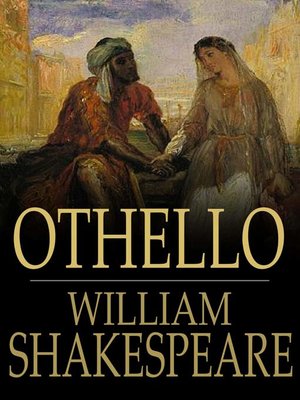
Othello

Image result for othello

Othello begins on a street in Venice, in the midst of an argument between Roderigo, a rich man, and Iago. Roderigo has been paying Iago to help him in his suit to Desdemona. But Roderigo has just learned that Desdemona has married Othello, a general whom Iago begrudgingly serves as ensign. Iago says he hates Othello, who recently passed him over for the position of lieutenant in favor of the inexperienced soldier Michael Cassio.

Unseen, Iago and Roderigo cry out to Brabanzio that his daughter Desdemona has been stolen by and married to Othello, the Moor. Brabanzio finds that his daughter is indeed missing, and he gathers some officers to find Othello. Not wanting his hatred of Othello to be known, Iago leaves Roderigo and hurries back to Othello before Brabanzio sees him. At Othello’s lodgings, Cassio arrives with an urgent message from the duke: Othello’s help is needed in the matter of the imminent Turkish invasion of Cyprus. Not long afterward, Brabanzio arrives with Roderigo and others, and accuses Othello of stealing his daughter by witchcraft. When he finds out that Othello is on his way to speak with the duke, -Brabanzio decides to go along and accuse Othello before the assembled senate.

Brabanzio’s plan backfires. The duke and senate are very sympathetic toward Othello. Given a chance to speak for himself, Othello explains that he wooed and won Desdemona not by witchcraft but with the stories of his adventures in travel and war. The duke finds Othello’s explanation convincing, and Desdemona herself enters at this point to defend her choice in marriage and to announce to her father that her allegiance is now to her husband. Brabanzio is frustrated, but acquiesces and allows the senate meeting to resume. The duke says that Othello must go to Cyprus to aid in the defense against the Turks, who are headed for the island. Desdemona insists that she accompany her husband on his trip, and preparations are made for them to depart that night.
In Cyprus the following day, two gentlemen stand on the shore with Montano, the governor of Cyprus. A third gentleman arrives and reports that the Turkish fleet has been wrecked in a storm at sea. Cassio, whose ship did not suffer the same fate, arrives soon after, followed by a second ship carrying Iago, Roderigo, Desdemona, and Emilia, Iago’s wife. Once they have landed, Othello’s ship is sighted, and the group goes to the harbor. As they wait for Othello, Cassio greets Desdemona by clasping her hand. Watching them, Iago tells the audience that he will use “as little a web as this” hand-holding to ensnare Cassio (II.i.169).
Othello arrives, greets his wife, and announces that there will be reveling that evening to celebrate Cyprus’s safety from the Turks. Once everyone has left, Roderigo complains to Iago that he has no chance of breaking up Othello’s marriage. Iago assures Roderigo that as soon as Desdemona’s “blood is made dull with the act of sport,” she will lose interest in Othello and seek sexual satisfaction elsewhere (II.i.222). However, Iago warns that “elsewhere” will likely be with Cassio. Iago counsels Roderigo that he should cast Cassio into disgrace by starting a fight with Cassio at the evening’s revels. In a soliloquy, Iago explains to the audience that eliminating Cassio is the first crucial step in his plan to ruin Othello. That night, Iago gets Cassio drunk and then sends Roderigo to start a fight with him. Apparently provoked by Roderigo, Cassio chases Roderigo across the stage. Governor Montano attempts to hold Cassio down, and Cassio stabs him. Iago sends Roderigo to raise alarm in the town.
The alarm is rung, and Othello, who had left earlier with plans to consummate his marriage, soon arrives to still the commotion. When Othello demands to know who began the fight, Iago feigns reluctance to implicate his “friend” Cassio, but he ultimately tells the whole story. Othello then strips Cassio of his rank of lieutenant. Cassio is extremely upset, and he laments to Iago, once everyone else has gone, that his reputation has been ruined forever. Iago assures Cassio that he can get back into Othello’s good graces by using Desdemona as an intermediary. In a soliloquy, Iago tells us that he will frame Cassio and Desdemona as lovers to make -Othello jealous.
In an attempt at reconciliation, Cassio sends some musicians to play beneath Othello’s window. Othello, however, sends his clown to tell the musicians to go away. Hoping to arrange a meeting with Desdemona, Cassio asks the clown, a peasant who serves Othello, to send Emilia to him. After the clown departs, Iago passes by and tells Cassio that he will get Othello out of the way so that Cassio can speak privately with Desdemona. Othello, Iago, and a gentleman go to examine some of the town’s fortifications.
Desdemona is quite sympathetic to Cassio’s request and promises that she will do everything she can to make Othello forgive his former lieutenant. As Cassio is about to leave, Othello and Iago return. Feeling uneasy, Cassio leaves without talking to Othello. Othello inquires whether it was Cassio who just parted from his wife, and Iago, beginning to kindle Othello’s fire of jealousy, replies, “No, sure, I cannot think it, / That he would steal away so guilty-like, / Seeing your coming” (III.iii.37–39).
Othello becomes upset and moody, and Iago furthers his goal of removing both Cassio and Othello by suggesting that Cassio and Desdemona are involved in an affair. Desdemona’s entreaties to Othello to reinstate Cassio as lieutenant add to Othello’s almost immediate conviction that his wife is unfaithful. After Othello’s conversation with Iago, Desdemona comes to call Othello to supper and finds him feeling unwell. She offers him her handkerchief to wrap around his head, but he finds it to be “[t]oo little” and lets it drop to the floor (III.iii.291). Desdemona and Othello go to dinner, and Emilia picks up the handkerchief, mentioning to the audience that Iago has always wanted her to steal it for him.
Iago is ecstatic when Emilia gives him the handkerchief, which he plants in Cassio’s room as “evidence” of his affair with Desdemona. When Othello demands “ocular proof” (III.iii.365) that his wife is unfaithful, Iago says that he has seen Cassio “wipe his beard” (III.iii.444) with Desdemona’s handkerchief—the first gift Othello ever gave her. Othello vows to take vengeance on his wife and on Cassio, and Iago vows that he will help him. When Othello sees Desdemona later that evening, he demands the handkerchief of her, but she tells him that she does not have it with her and attempts to change the subject by continuing her suit on Cassio’s behalf. This drives Othello into a further rage, and he storms out. Later, Cassio comes onstage, wondering about the handkerchief he has just found in his chamber. He is greeted by Bianca, a prostitute, whom he asks to take the handkerchief and copy its embroidery for him.
Through Iago’s machinations, Othello becomes so consumed by jealousy that he falls into a trance and has a fit of epilepsy. As he writhes on the ground, Cassio comes by, and Iago tells him to come back in a few minutes to talk. Once Othello recovers, Iago tells him of the meeting he has planned with Cassio. He instructs Othello to hide nearby and watch as Iago extracts from Cassio the story of his affair with Desdemona. While Othello stands out of earshot, Iago pumps Cassio for information about Bianca, causing Cassio to laugh and confirm Othello’s suspicions. Bianca herself then enters with Desdemona’s handkerchief, reprimanding Cassio for making her copy out the embroidery of a love token given to him by another woman. When Desdemona enters with Lodovico and Lodovico subsequently gives Othello a letter from Venice calling him home and instating Cassio as his replacement, Othello goes over the edge, striking Desdemona and then storming out.
That night, Othello accuses Desdemona of being a whore. He ignores her protestations, seconded by Emilia, that she is innocent. Iago assures Desdemona that Othello is simply upset about matters of state. Later that night, however, Othello ominously tells Desdemona to wait for him in bed and to send Emilia away. Meanwhile, Iago assures the still-complaining Roderigo that everything is going as planned: in order to prevent Desdemona and Othello from leaving, Roderigo must kill Cassio. Then he will have a clear avenue to his love.
Iago instructs Roderigo to ambush Cassio, but Roderigo misses his mark and Cassio wounds him instead. Iago wounds Cassio and runs away. When Othello hears Cassio’s cry, he assumes that Iago has killed Cassio as he said he would. Lodovico and Graziano enter to see what the commotion is about. Iago enters shortly thereafter and flies into a pretend rage as he “discovers” Cassio’s assailant Roderigo, whom he murders. Cassio is taken to have his wound dressed.
Meanwhile, Othello stands over his sleeping wife in their bedchamber, preparing to kill her. Desdemona wakes and attempts to plead with Othello. She asserts her innocence, but Othello smothers her. Emilia enters with the news that Roderigo is dead. Othello asks if Cassio is dead too and is mortified when Emilia says he is not. After crying out that she has been murdered, Desdemona changes her story before she dies, claiming that she has committed suicide. Emilia asks Othello what happened, and Othello tells her that he has killed Desdemona for her infidelity, which Iago brought to his attention.
Montano, Graziano, and Iago come into the room. Iago attempts to silence Emilia, who realizes what Iago has done. At first, Othello insists that Iago has told the truth, citing the handkerchief as evidence. Once Emilia tells him how she found the handkerchief and gave it to Iago, Othello is crushed and begins to weep. He tries to kill Iago but is disarmed. Iago kills Emilia and flees, but he is caught by Lodovico and Montano, who return holding Iago captive. They also bring Cassio, who is now in a chair because of his wound. Othello wounds Iago and is disarmed. Lodovico tells Othello that he must come with them back to Venice to be tried. Othello makes a speech about how he would like to be remembered, then kills himself with a sword he had hidden on his person. The play closes with a speech by Lodovico. He gives Othello’s house and goods to Graziano and orders that Iago be executed.

Monday, 11 February 2019

Movie review :- URI : The Sargical Strike

URI in depth review :


 On 10 Feb, students of English department went to watched movie Uri the surgical strikes written and directed by Aditya Dhar.


1. It's a movie which shows the power of Indian army _(Special Forces)_ capable of handling these types of situation and of course which they did and it's nothing but The Sargical Strike which was a silent war over the POK region.

2. A movie that shows the life of a soldier I mean how they are continually protecting us without caring about their own life and family.


3. A movie which shows the technology, equipments, advance weapons which we have !


4. Personally I  really liked that scene when they are finding a spy equipment embedded with a camara and that boy who is intern at DRDO ( Defense Research And Development Organisation ) came with the solution.
So, it's shows that the little ideas in little mind should come up, never stop them,
Because progress is impossible without process.


5. The main thing I really liked is women empowerment It's not compulsory to make them housewife. They also have their own life, their thoughts let them grow up because equality is the Justis !!


Thinking activity: ELT & ICT

1) Why is it necessary to use Technology in Education?  Change is the rule of nature, if you don't change or update yours...