Sunday, 17 March 2019

Reality and Sincerity By F.R.Leavis

Reality and Sincerity By F.R.Leavis


This is basically an out come of the critical comparison of there  poem.

1...Alexander Barbara 
2...Emily Brontle's : ' cold in the earth'
3...Thomas Hardy's : ' Acter a Journey'

Criticism is done in order to establish a preference between all the three poem and as a resell or them are ordered and the third would have it's plays automatically. 

Barber is about irreparable lose, it's deals with the suffering of an unpardonable sorrow, it is basically cheat in nature, extrema vague and unrealistic in nature. There for Barbara does not need and kind of analysis.

The other tow poems are emotionally intense and the critic here tries to establish superiority of one poem over the other as per as the critic the analysis. We come across the fact that Hardy's work is better as compared to " Emily Baloney's , Cold in the Earth" .


%.....Analysis of the poem : " Cold in the Earth" - Emily Bronte

 " Agony" is evident in the poem them the poem talks about 15th wilds December . she believes that her wait is weighter productive nor gainful.

 " Misery, Despair " are never good and she decides not to spend any time further on it, the tone of the poem is compassionate and ultimately resolving in nature and it has a very sentimental mood attached to it. The poem suggests that the grave of her beloved is covered with to depressing seasons, winter and auto-um.The covering of the grave suggests that the poet is no longer conceder with her beloved at that point. The poet that the best period of their life has gone . The hopes would not as bright, on the contrary.They bright, on the...would be sterner and darken.Form the sixth, stanza the poet has sate herself free from the shackles of lamentations. In turmerics of figures of speech alingtration and repetition alright the executional.

%..... Analysis of " After a Journey" 

 This one talks about the past memories of the port. This poem interments of analysis can be understood into parts. From line to one to sixteen . We come to know about how " Thomas Hardy " tries to find " Emma". From lines seventeen to thirty two, we get an impression them Emma leads him to the memories of their past. In lines one to eight, the poet wants to talk with the ghost.

In lines nice to sixteen, the speaker shower his feelings of regret seems the relationship is not the saying is it was. He sees the ghost in the only countryside of Cromwell with the place in England. In lines seventeen to thirty four Emma ghost lid hand to they are past memory and he transports himself to nostalgic movement. In line twenty five to thirty two visual imagery is used very appropriately. There are imagery is like birds and seeks. Visual imagery like starts, dawn, flowers etc... words like vanished, flitting are also examples of synthetic imagery. All-hough imagery is shown in the poem are vivid Hardy mixture realist them through his writing . This poem is application of how Hardy remembers his beloved after her death. 

%..... Conclusion

Hardy's poem is more conversational in nature is Trough's to be more sinecure and becomes real in turme at it's affords. Emma is the enforce in turmes of the subject in Thomas Hardy,s poem. Both poem's are an out come of experience but integrity in Hardy's poem is more striking as he trains to depict his memories and his suffering.

The nightingale and Rose


The story begins with a young student who is lamenting in his garden because the love of his life will dance with him in the ball only if he brings her a red rose but there is no red rose in his garden.  The Nightingale, living in the oak-tree of his garden, hears the young man crying over his helplessness and lamenting the fact that all his learning is useless since it cannot win him a girl’s love.  The nightingale comes to know that the young man is weeping for a red rose. She feels the pain of that boy and wants to help him.
The bird flies and goes to the various bushes but cannot find a red rose. Finally she comes to know about a way of getting a red rose by a tree. She performs a suicidal act while singing with his heart on the thorn, giving her heart’s blood to a white rose which turns it in to a beautiful red rose. In this process the Nightingale dies.
When the student wakes up, he sees the red rose under his window, plucks it joyously and brings it to his love.  The girl rejects the rose by saying that it will not match her blue dress and someone else has brought her jewels that are worth more than a rose. The boy throws the rose in the gutter and a cart runs over it.
At the end he decides that logic is better than love and love is unrealistic. He goes back to his home and starts reading a book.

la belle damn sens mercy


The first three stanzas of “La Belle Dame sans Merci” pose the speaker’s questions to a melancholy knight who looks lonely, listless, and ill. The sedge, a grasslike plant that thrives in wetlands, has dried up, and the knight, as if in sympathy with this arid setting, appears depleted both physically and emotionally.

In stanza four, the knight begins to answer the speaker’s questions, reporting that he met a beautiful, fairylike lady in the meads (meadows). Enchanted by this beautiful figure, the knight describes her graceful movement, her alluring long hair, and her lively appearance, apparent in her wild eyes.
In stanza five, he makes a garland (a wreath of intertwined flowers) for her head and bracelets that enhance her natural perfume. She is responsive to his loving tribute, and her sweet moaning signals that she is falling in love with him. In stanza six, enraptured with his newfound love, the knight places her on his horse and follows her all day as she looks down as him and sings a fairy song, while in stanza seven she gathers and feeds him sweet roots and delectable foods to express her true love for him.

In stanza eight, the mood of the poem shifts back toward melancholy, when the knight relates how the woman took him to a grotto, a sort of magical space the knight associates with fairy creatures such as elves. In this setting, the delicate, fleeting nature of the lady’s feelings suddenly erupts with her tears, which the knight tries to soothe with his kisses that shut her “wild wild eyes”—words that suggest he has fallen in love with a creature that he cannot possess.

It is the lady who lulls the knight to sleep, however. In stanzas nine to eleven, he is engulfed in a dream of kings and princes who are pale (as he is at the beginning of the poem) and who warn him that he has become enslaved by the beautiful lady without mercy. When he awakes, the knight finds himself on the cold hillside, feeling the deathlike cold of his dream and looking like the sad figure the speaker first encountered. Coming full circle in stanza twelve, the knight notes that his experience with the lady is why he remains in this bleak setting, alone and feeling that he has lost the love of this beautiful figure that haunts and blights not only his life but also the world in which he finds himself.
This deceptively simple tale written in a ballad style, featuring short lines and romantic longings, evokes the human yearning for an eternal, imperishable love, a bond that outlasts death and that conquers mortality. To lose the lady is tantamount to a kind of death for the knight. Thus, John Keats uses the medieval setting as a kind of allegory, a symbolic representation of what love represents. To the lover, the beloved is a fairy creature usually associated with perfection and with the desire to do good and to protect the loved one.

The knight is at the mercy of his love, meaning both the lady and the knight’s feelings for the lady. When she withdraws her love, she is portrayed as without mercy. The heat of passion vanishes, and this is why the knight feels cold and why the world itself seems frigid.

Keats differs from his medieval sources insofar as he is conscious of a psychological dimension in the knight’s suffering. In other words, “La Belle Dame sans Merci” is as much about the knight’s state of mind as it is about the lady that he meets. The grotto to which they retire can be viewed as a sort of underworld of the mind, the “gloam,” the twilight world in which dreams occur and reveal the deepest origins of human apprehensions.

Like many of his contemporaries—Romantic poets such as Samuel Taylor Coleridge and Sir Walter Scott—Keats was drawn to medieval poems, romances, and stories because he believed this literature expressed an emotional truth that needed to be recovered and cherished rather than diminished by those who saw the late eighteenth and nineteenth centuries as the Age of Reason. Reason seemed to its proponent to relegate the fairy tales and fables of the past to the “dark ages” when human beings were prey to their fears and anxieties. To Keats, the older forms of poetry such as the ballad should be resurrected so as not to ignore the vital—indeed inescapable—role that human emotions play in human affairs.

Keats biographer Robert Gittings notes that the poem’s use of archaic words and constructions, such as “meads,” “grot,” “withereth,” and “woe-betide,” as well as the ballad structure itself, recalls Lyrical Ballads (1798), the joint work of Coleridge and William Wordsworth that heralded the great age of Romantic poetry. Indeed, as Gittings notes, when Keats accidentally met Coleridge on Hampstead Heath, the latter spent an hour discoursing on the nature of dreams, perhaps thus contributing to the role dream plays in “La Belle Dame sans Merci.” Morever, as Gittings also notes, Coleridge later remembered grasping Keats’s hand, which seemed as cold as death. Keats, who would die of tuberculosis in agony over his unfulfilled love for Fanny Brawne, found a way, Gittings implies, of projecting his own anguish into this antique form of poetry.

Another interpretation of the poem—suggested by a passage in Aileen Ward’s biography of Keats—emphasizes the theme of betrayal, that love will not last, and that the knight suffers because of the lady’s withdrawal of her affections. After all, the knight is warned by princes and kings who are deathly pale and who appear with the gaping visages of corpses. The grotto in the poem could then be viewed as the grave of love with the lady already mourning her knight’s decease. At the very least, there is a foreboding atmosphere in the poem that Ward associates with Keats’s own distraught reflections on his love for Fanny Brawne.

Like Keats’s other biographers, Walter Jackson Bate notes that the poem may stem from but it also transcends Keats’s biography. Bate sees the poem as a “distillation of diverse feelings,” an apt way of suggesting the poem’s universality, its ability to evoke the conflicting emotions that love can arouse from intense attachment, euphoria, and devotion to alienation, depression, and disaffection. Bate questions the knight’s behavior, wondering whether the poem is more about his persistence than it is about the lady’s rejection of him. What does it mean, for example, that the lady looks “sidelong” at the knight? The word implies that she is not straightforward or fully committed to him, especially since, as Bate notes, she expresses her love in “language strange.” The lady is not entirely human, the biographer notes, and therefore she may be misinterpreted by the knight as well as being a projection of his imagination, of what he wants to come true.

Saturday, 16 March 2019

THe Bluest eyes


"The Bluest Eyes"

Toni Morrison has long been one of my favorite authors.  
The Bluest Eye is, most simply, a story of beauty and what makes beauty. More specifically, it tells the story of Claudia, her sister Frieda, and their neighbor and sometimes friend Pecola Breedlove. Pecola and Claudia, while often not getting along – Pecola is a bit of the town oddball, and everyone knows how cruel kids can be – share similar feelings about beauty in relation to race. 
Claudia hate Shirley Temple and some of her fellow white classmates because they’re white and, thus, are given attention and praise. Pecola also realizes the power behind being white, but instead of becoming angry, she desires to be like them. More specifically, she desires to have blue eyes, because she believes that blue eyes are what make white people so beautiful. However, more than a story of just beauty, The Bluest Eye also makes comments on race, gender, and getting caught in a life you didn’t intend. Themes that, if you’ve ever read Morrison, you know she’s touched on in practically all her other books.
Running along side the story of Pecola and Claudia is the story of Polly and Cholly, Pecola’s mother and father. The two are trapped in a marriage of hate, violence, and frustration. 
However, out of what seems to be a sense of proving the ability to stay, a misguided sense of duty, the two remain together. Both stories are told, Polly’s about a young woman with a lame foot who takes her strength not from her husband and children but from the movies she escapes in to and the luxuries she can pretend to have from the white family she works for. Cholly, abandoned by mother and father and raised to his teens by an aunt who passes away, is a man who enters in to marriage without knowing why, knowing the whole time that the thing most abhorent to him is sameness and obligation. 
Obviously, putting the two together results in the kind of marriage that **spoilers** leads to the rape and impregnation, and eventual miscarriage and insanity, of Pecola, raped by her father and beaten and berated by her mother. It is also the relationship that teaches Pecola her ugliness, an ugliness that forces her to the local witch-doctor to ask for blue eyes. The price she has to pay? ‘Sacrificing’ a local dog via poison. **End spoilers** 
Morrison’s writing style is always addicting. At once complicated and simple, the book hits on a level that somewhat goes beyond conscious understanding. While her individual sentences can sometimes be convoluted, and there are many times when you just have to trust her, trust that it will all be explained in due course, the power of her story comes through and comes through swimmingly.

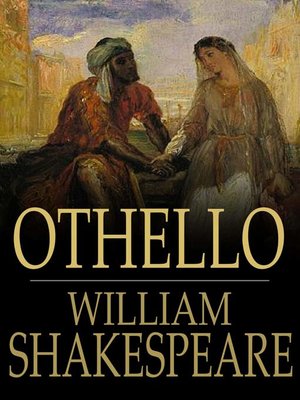
Othello

Image result for othello

Othello begins on a street in Venice, in the midst of an argument between Roderigo, a rich man, and Iago. Roderigo has been paying Iago to help him in his suit to Desdemona. But Roderigo has just learned that Desdemona has married Othello, a general whom Iago begrudgingly serves as ensign. Iago says he hates Othello, who recently passed him over for the position of lieutenant in favor of the inexperienced soldier Michael Cassio.

Unseen, Iago and Roderigo cry out to Brabanzio that his daughter Desdemona has been stolen by and married to Othello, the Moor. Brabanzio finds that his daughter is indeed missing, and he gathers some officers to find Othello. Not wanting his hatred of Othello to be known, Iago leaves Roderigo and hurries back to Othello before Brabanzio sees him. At Othello’s lodgings, Cassio arrives with an urgent message from the duke: Othello’s help is needed in the matter of the imminent Turkish invasion of Cyprus. Not long afterward, Brabanzio arrives with Roderigo and others, and accuses Othello of stealing his daughter by witchcraft. When he finds out that Othello is on his way to speak with the duke, -Brabanzio decides to go along and accuse Othello before the assembled senate.

Brabanzio’s plan backfires. The duke and senate are very sympathetic toward Othello. Given a chance to speak for himself, Othello explains that he wooed and won Desdemona not by witchcraft but with the stories of his adventures in travel and war. The duke finds Othello’s explanation convincing, and Desdemona herself enters at this point to defend her choice in marriage and to announce to her father that her allegiance is now to her husband. Brabanzio is frustrated, but acquiesces and allows the senate meeting to resume. The duke says that Othello must go to Cyprus to aid in the defense against the Turks, who are headed for the island. Desdemona insists that she accompany her husband on his trip, and preparations are made for them to depart that night.
In Cyprus the following day, two gentlemen stand on the shore with Montano, the governor of Cyprus. A third gentleman arrives and reports that the Turkish fleet has been wrecked in a storm at sea. Cassio, whose ship did not suffer the same fate, arrives soon after, followed by a second ship carrying Iago, Roderigo, Desdemona, and Emilia, Iago’s wife. Once they have landed, Othello’s ship is sighted, and the group goes to the harbor. As they wait for Othello, Cassio greets Desdemona by clasping her hand. Watching them, Iago tells the audience that he will use “as little a web as this” hand-holding to ensnare Cassio (II.i.169).
Othello arrives, greets his wife, and announces that there will be reveling that evening to celebrate Cyprus’s safety from the Turks. Once everyone has left, Roderigo complains to Iago that he has no chance of breaking up Othello’s marriage. Iago assures Roderigo that as soon as Desdemona’s “blood is made dull with the act of sport,” she will lose interest in Othello and seek sexual satisfaction elsewhere (II.i.222). However, Iago warns that “elsewhere” will likely be with Cassio. Iago counsels Roderigo that he should cast Cassio into disgrace by starting a fight with Cassio at the evening’s revels. In a soliloquy, Iago explains to the audience that eliminating Cassio is the first crucial step in his plan to ruin Othello. That night, Iago gets Cassio drunk and then sends Roderigo to start a fight with him. Apparently provoked by Roderigo, Cassio chases Roderigo across the stage. Governor Montano attempts to hold Cassio down, and Cassio stabs him. Iago sends Roderigo to raise alarm in the town.
The alarm is rung, and Othello, who had left earlier with plans to consummate his marriage, soon arrives to still the commotion. When Othello demands to know who began the fight, Iago feigns reluctance to implicate his “friend” Cassio, but he ultimately tells the whole story. Othello then strips Cassio of his rank of lieutenant. Cassio is extremely upset, and he laments to Iago, once everyone else has gone, that his reputation has been ruined forever. Iago assures Cassio that he can get back into Othello’s good graces by using Desdemona as an intermediary. In a soliloquy, Iago tells us that he will frame Cassio and Desdemona as lovers to make -Othello jealous.
In an attempt at reconciliation, Cassio sends some musicians to play beneath Othello’s window. Othello, however, sends his clown to tell the musicians to go away. Hoping to arrange a meeting with Desdemona, Cassio asks the clown, a peasant who serves Othello, to send Emilia to him. After the clown departs, Iago passes by and tells Cassio that he will get Othello out of the way so that Cassio can speak privately with Desdemona. Othello, Iago, and a gentleman go to examine some of the town’s fortifications.
Desdemona is quite sympathetic to Cassio’s request and promises that she will do everything she can to make Othello forgive his former lieutenant. As Cassio is about to leave, Othello and Iago return. Feeling uneasy, Cassio leaves without talking to Othello. Othello inquires whether it was Cassio who just parted from his wife, and Iago, beginning to kindle Othello’s fire of jealousy, replies, “No, sure, I cannot think it, / That he would steal away so guilty-like, / Seeing your coming” (III.iii.37–39).
Othello becomes upset and moody, and Iago furthers his goal of removing both Cassio and Othello by suggesting that Cassio and Desdemona are involved in an affair. Desdemona’s entreaties to Othello to reinstate Cassio as lieutenant add to Othello’s almost immediate conviction that his wife is unfaithful. After Othello’s conversation with Iago, Desdemona comes to call Othello to supper and finds him feeling unwell. She offers him her handkerchief to wrap around his head, but he finds it to be “[t]oo little” and lets it drop to the floor (III.iii.291). Desdemona and Othello go to dinner, and Emilia picks up the handkerchief, mentioning to the audience that Iago has always wanted her to steal it for him.
Iago is ecstatic when Emilia gives him the handkerchief, which he plants in Cassio’s room as “evidence” of his affair with Desdemona. When Othello demands “ocular proof” (III.iii.365) that his wife is unfaithful, Iago says that he has seen Cassio “wipe his beard” (III.iii.444) with Desdemona’s handkerchief—the first gift Othello ever gave her. Othello vows to take vengeance on his wife and on Cassio, and Iago vows that he will help him. When Othello sees Desdemona later that evening, he demands the handkerchief of her, but she tells him that she does not have it with her and attempts to change the subject by continuing her suit on Cassio’s behalf. This drives Othello into a further rage, and he storms out. Later, Cassio comes onstage, wondering about the handkerchief he has just found in his chamber. He is greeted by Bianca, a prostitute, whom he asks to take the handkerchief and copy its embroidery for him.
Through Iago’s machinations, Othello becomes so consumed by jealousy that he falls into a trance and has a fit of epilepsy. As he writhes on the ground, Cassio comes by, and Iago tells him to come back in a few minutes to talk. Once Othello recovers, Iago tells him of the meeting he has planned with Cassio. He instructs Othello to hide nearby and watch as Iago extracts from Cassio the story of his affair with Desdemona. While Othello stands out of earshot, Iago pumps Cassio for information about Bianca, causing Cassio to laugh and confirm Othello’s suspicions. Bianca herself then enters with Desdemona’s handkerchief, reprimanding Cassio for making her copy out the embroidery of a love token given to him by another woman. When Desdemona enters with Lodovico and Lodovico subsequently gives Othello a letter from Venice calling him home and instating Cassio as his replacement, Othello goes over the edge, striking Desdemona and then storming out.
That night, Othello accuses Desdemona of being a whore. He ignores her protestations, seconded by Emilia, that she is innocent. Iago assures Desdemona that Othello is simply upset about matters of state. Later that night, however, Othello ominously tells Desdemona to wait for him in bed and to send Emilia away. Meanwhile, Iago assures the still-complaining Roderigo that everything is going as planned: in order to prevent Desdemona and Othello from leaving, Roderigo must kill Cassio. Then he will have a clear avenue to his love.
Iago instructs Roderigo to ambush Cassio, but Roderigo misses his mark and Cassio wounds him instead. Iago wounds Cassio and runs away. When Othello hears Cassio’s cry, he assumes that Iago has killed Cassio as he said he would. Lodovico and Graziano enter to see what the commotion is about. Iago enters shortly thereafter and flies into a pretend rage as he “discovers” Cassio’s assailant Roderigo, whom he murders. Cassio is taken to have his wound dressed.
Meanwhile, Othello stands over his sleeping wife in their bedchamber, preparing to kill her. Desdemona wakes and attempts to plead with Othello. She asserts her innocence, but Othello smothers her. Emilia enters with the news that Roderigo is dead. Othello asks if Cassio is dead too and is mortified when Emilia says he is not. After crying out that she has been murdered, Desdemona changes her story before she dies, claiming that she has committed suicide. Emilia asks Othello what happened, and Othello tells her that he has killed Desdemona for her infidelity, which Iago brought to his attention.
Montano, Graziano, and Iago come into the room. Iago attempts to silence Emilia, who realizes what Iago has done. At first, Othello insists that Iago has told the truth, citing the handkerchief as evidence. Once Emilia tells him how she found the handkerchief and gave it to Iago, Othello is crushed and begins to weep. He tries to kill Iago but is disarmed. Iago kills Emilia and flees, but he is caught by Lodovico and Montano, who return holding Iago captive. They also bring Cassio, who is now in a chair because of his wound. Othello wounds Iago and is disarmed. Lodovico tells Othello that he must come with them back to Venice to be tried. Othello makes a speech about how he would like to be remembered, then kills himself with a sword he had hidden on his person. The play closes with a speech by Lodovico. He gives Othello’s house and goods to Graziano and orders that Iago be executed.

Monday, 11 February 2019

Movie review :- URI : The Sargical Strike

URI in depth review :


 On 10 Feb, students of English department went to watched movie Uri the surgical strikes written and directed by Aditya Dhar.


1. It's a movie which shows the power of Indian army _(Special Forces)_ capable of handling these types of situation and of course which they did and it's nothing but The Sargical Strike which was a silent war over the POK region.

2. A movie that shows the life of a soldier I mean how they are continually protecting us without caring about their own life and family.


3. A movie which shows the technology, equipments, advance weapons which we have !


4. Personally I  really liked that scene when they are finding a spy equipment embedded with a camara and that boy who is intern at DRDO ( Defense Research And Development Organisation ) came with the solution.
So, it's shows that the little ideas in little mind should come up, never stop them,
Because progress is impossible without process.


5. The main thing I really liked is women empowerment It's not compulsory to make them housewife. They also have their own life, their thoughts let them grow up because equality is the Justis !!


Tuesday, 4 December 2018

assignment paper 12

click here to evaluate my assignment.


English for business purpose

Name: - Nirali dungrani
Roll no: - 24
Enrolment no: - 2069108420180012
Paper: -12 ELT 1(English Language teaching 1)
Topic: - English for business purpose
Submitted to: - Department of English MKB uni.


Introduction


English is the language of science, of aviation, computers, diplomacy, and tourism. Knowing English increases your chances of getting a good job in a multinational company within your home country or for finding work abroad. It’s also the language of international communication, the media and the internet, so learning English is important for socialising and entertainment as well as work!
Let’s look at the top 4 reasons why studying English is so important:
1. English is the Language of International Communication
English may not be the most spoken language in the world, but it is the official language of 53 countries and spoken by around 400 million people across the globe. Being able to speak English is not just about being able to communicate with native English speakers, it is the most common second language in the world. If you want to speak to someone from another country then the chances are that you will both be speaking English to do this.
The British Council projects that by 2020 two billion people in the world will be studying English. Learning English is important as it enables you to communicate easily with your fellow global citizens. When you study English at ELC schools, you will be making friends with people from lots of different countries, using English as your common language!

2. Speaking English gives you Access to a World of Entertainment

Many of the world’s top films, books and music are published and produced in English. Therefore, by learning English you will have access to a great wealth of entertainment and will be able to have a greater cultural understanding.
If you speak English, you won't need to rely on translations and subtitles anymore to enjoy your favourite books, songs, films and TV shows. Watching movies and television programmes in the English language is also a great and fun way to learn it!

 3. Learning English gives you Access to more of the Internet

According to a report by Education First, English is the language of the internet. An estimated 565 million people use the internet every day, and an estimated 52 percent of the world’s most visited websites are displayed in the English language.
Learning English is important as it gives you access to over half the content on the internet. Knowing how to read English will allow you access to billions of pages of information which may not be otherwise available!

The Importance of Learning English Today

Although learning English can be challenging and time-consuming, we can see that it is also very valuable to learn and can create many opportunities!
Want some advice on fun ways to learn English? Why not check out our blog ‘Is Learning English Your Biggest Challenge yet? These 7 tips will help you.’
The English Language Centre is a not-for-profit organisation. This means that all our profits are re-invested in the school, our purpose is to provide the highest possible quality in English language teaching at our schools in Brighton and Eastbourne.

English as the Language of Business

Definition

Image result for eng for business purpose

English which is used in business is called the business English.
The type English which is used in meetings, presentations, communication etc... At business is called business English.
Business English is used widely and generally in business community and cannot be adaptable to another type on industry wherein most of the employes have native toungues and may cause a lot of difference if business English used.

English is the dominant business language and it has become almost a necessity for people to speak English if they are to enter a global workforce. Research from all over the world shows that cross-border business communication is most often conducted in English and many international companies expect employees to be fluent in English.
Global companies such as Airbus, Daimler-Chrysler, Fast Retailing, Nokia, Renault, Samsung, SAP, Technicolor, and Microsoft in Beijing, have mandated English as their official corporate language. In addition, in 2010 the company Rakuten, a Japanese cross between Amazon and Ebay, made it mandatory for their 7,100 Japanese employees to be able to speak English.
The importance of learning English in the international marketplace cannot be understated - learning English really can change your life.

Importance of Good English in Business


Good English skills are like a one-way ticket to business success.
If you are a non-native speaker of the language or just someone who has difficulties with it, you may be wondering, “Why should I put time and energy into perfecting my English for business? Why must I give it greater importance than any other language I know? Why is it a standard of judging whether someone is fit for a job or not?”
 
Why Is English So Important in Business?
Deciding whether English is important for business not a question of giving the language greater importance in general. It is simply a question of survival and successful communication.
Face the facts.

English is the language of business and communication worldwide.

English is the most widespread spoken and written language in the world.
An estimated 1500 million people speak the language worldwide, out of which only 375 million are native speakers. Over 1 billion people speak it as a foreign language.
So, if you don’t know it well, you won’t be able to effectively communicate with many other people.

English is the language of the internet.

English tops the internet in number of users and is also a top language in tech. And you have to be tech-savvy to do well in the workplace—whether this means being able to put together Excel sheets, do a conference call, research and fact-check data or use social media successfully.

English is the language of pop culture.

While this might not seem as important as the facts above, you don’t want to be the one at work who always gets the punch line a little too late (doesn’t know when to laugh during a joke). You don’t want to feel out of place.
You need to be aware of common cultural nuances to better communicate at work and be understood.
English is the “lingua franca” (meaning “common language”) of not only international business, but also of all kinds of communication worldwide. This means it is useful for understanding and being able to share common experiences and references with your colleagues.
So naturally, the ever-increasing popularity of the English language means you must know the language well to succeed at your career and climb the corporate ladder. Now we are going to look more closely at why (and how) you should improve your English for business.

It will help you to communicate better with your colleagues.

Working in an office means teamwork and collaboration. Even if you are an introvert (someone who prefers to spend more time alone), you will have to interact with your colleagues. And that will be difficult if you don’t know the language they speak very well. In a worst-case scenario, it may even lead to misunderstandings that might put your job at stake.
Similarly, you need to know the right people to get the best job or a promotion at work. For that you need superior networking skills. Learning business English helps you to develop both your language and interpersonal (communication) skills.
Ultimately, it will help you to adequately express and represent yourself in front of other people.
The best way to learn better English communication is to speak the language often, preferably with a study partner in person or online, via Skype. You can also check out this MOOC on communication skills on Coursera.


 It is important for delivering presentations and speeches.

As mentioned before, business English is important for effective communication. You cannot deliver a presentation to your team or be in charge of a board meeting if you speak in your native tongue and if no one else in that room speaks that language. So you need to speak the “common tongue” well, so you can translate your thoughts and ideas into coherent (clear and logical) sentences that everyone can understand and respond to.
Just having a great idea isn’t enough. You have to successively express it to your audience.
Luckily, there are also plenty of online courses that focus on successful business meetings and presentations.

Kind of business English classes
1)   Traditional classes
2)   Intensive classes
3)   Public speaking in English classes
4)   Distance learning classes
5)   Pronunciation classes
6)   Learning by doing classes
7)   Conversation classes
8)   Lunchtime conversation classes

Difference between general English and business English
1)   General English aims to achieve a high standard of everyday English skills. It covers the four main skills of reading, writing, listening and speaking.
Business English aims to achieve high standards of English communication skills at business. It covers many skills like meetings, presentations, negotiations, communication.

Use of business English
1)   International trades
2)   Negotiations
3)   Emails/telephones
4)   Meetings
5)   Presentations
6)   Management
7)   Team-leading

Conclusion
Business English enables the businessmen to prepare for a career in businesses commerce. Business English also enables the businessmen to understand the mechanism of international business and trade.
Business English is the mos=de of communication at the work place. Business English is being used in meetings, presentations, negotiations, working overseas, management, team-leading etc...

(the english language center) (Sair) (FluentU Business English BlogFluentU Business English Blog)

Works Cited

FluentU Business English BlogFluentU Business English Blog. 3 11 2018. <https://www.fluentu.com/blog/business-english/importance-of-english-in-business/>.
Sair, Saad. business english. 3 11 2018. 20 1 2015 <https://www.slideshare.net/saadsair/business-english-43703024>.
the english language center. 3 11 2018. 30 9 2013 <https://www.elc-schools.com/blog/4-reasons-why-learning-english-is-so-important/>.


Thinking activity: ELT & ICT

1) Why is it necessary to use Technology in Education?  Change is the rule of nature, if you don't change or update yours...